
Morrison County Multi-Day Arrest Sources
The county publishes no official 72-hour or weekly booking blotter. Its closest offering is Sheriff News, a feed of chosen incident releases. Each item carries a title, a posting date, an update date, and a short narrative. What it lacks is row-by-row coverage of every person booked into Morrison County Jail.
For a broader sweep, the Brainerd Dispatch police blotter works better. Its dated stories split reports by agency, including Little Falls Police and Morrison County Sheriff. That layout can surface arrests from earlier days. Remember, though, that it is journalism. Stories can be selective, delayed, paywalled, or missing entirely for a stretch. Neither source proves someone is still jailed.
Read Morrison County Arrest Reports
Start with the publisher's date and work backward. The date on an article rarely matches the date of the incident itself. Headlines also blur jurisdictions. A city officer, a county deputy, or another agency may have made the arrest. Check those agency labels as part of the search. Then confirm details with the record custodian.
- Search Sheriff News by date and key incident terms. Note both the posted and updated dates.
- Check the Brainerd Dispatch blotter and identify the agency subsection before reading a row.
- Compare the reported arrest date, time, reason, location, and age. Do not treat a close match as proof of identity.
- Use the Morrison County roster only to ask whether the person is currently held. It is not the historical arrest log.
- Request the incident or booking record from the originating agency when a published item lacks the needed details.
- Follow a filed case in Minnesota Court Records Online for the charge history and disposition.
For something that may have happened today, try the Morrison County 24 Hour Arrests route first. Its live-roster and jail-phone workflow suits new intake far better than historical digging.
Morrison Arrest Log Field Differences
The two multi-day sources use different formats. Don't merge their fields into one invented county schema. A county narrative may include facts a newspaper row skips, while the newspaper may pack several agencies into a single dated article.
| Source | Observed content |
|---|---|
| Morrison Sheriff News | Incident date and place, age, suspected charge, agency details, narrative, post date, and update date when supplied. |
| Brainerd Dispatch blotter | Agency section, age, arrest date and time, reported reason, and location. |
| Not reliably present | MNI, jail booking number, bond, current custody status, and official booking photo. |
Watch the wording. A blotter's "reason" is just a short report label, and a release's "charge" may still be pending rather than proven in court. Neither equals a judge's decision. The Brainerd Dispatch runs no booking-photo gallery. For a photo, MNI number, booking details, intake time, charge, and bond, the jail roster is the official source while a person remains held.
The Morrison County Sheriff News archive displays how selected reports are dated and summarized.
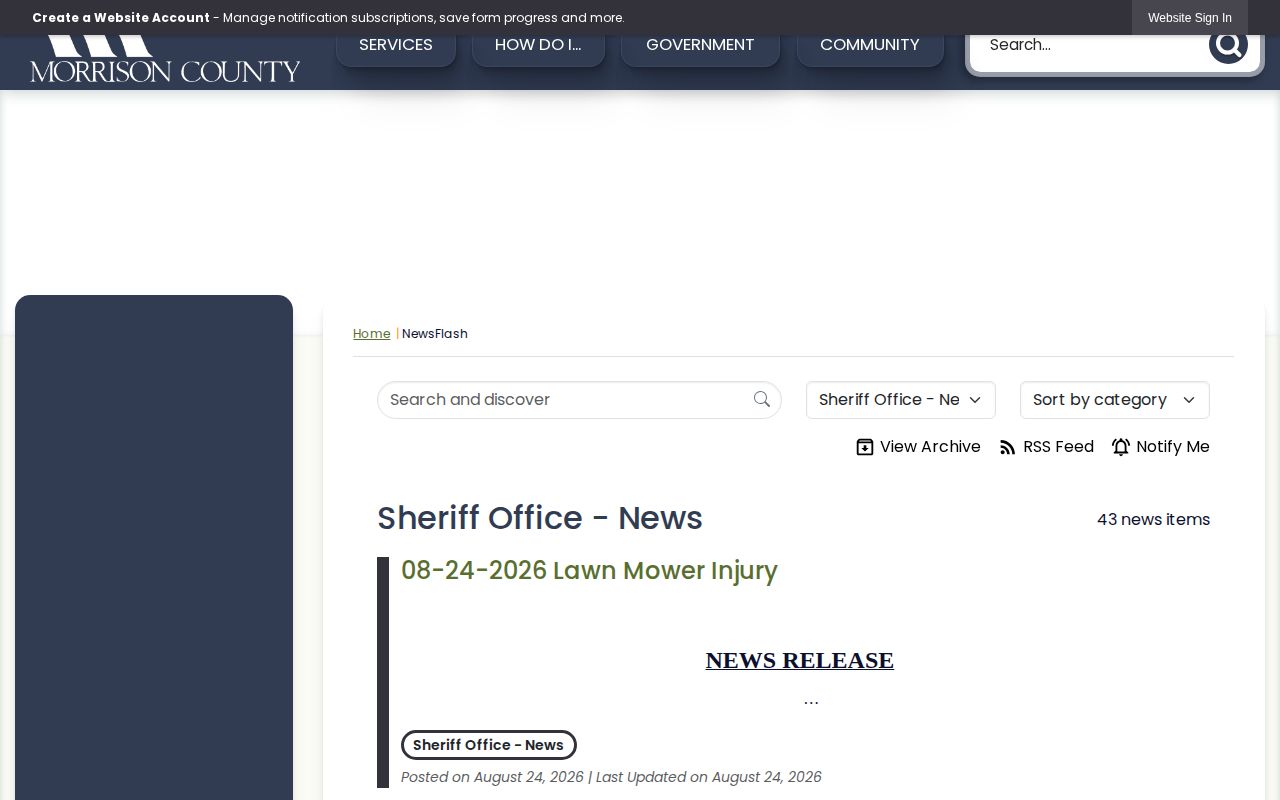
The page helps with incident research. It is no full jail booking ledger.
Morrison Weekend Arrest Publication
No Morrison County source commits to a weekend or holiday publishing schedule. A dated blotter may bundle incidents from several earlier days. A sheriff release may appear days after the event. A Monday article only counts as a weekend booking list if its own rows say so. Silence is not proof, either, since missing coverage does not mean nobody was arrested.
Custody and publication are separate states. Someone can be released before any news item runs. Another person can sit on the jail roster long past the incident date. Weekend readers should compare four things. These are the roster timestamp, the article date, each incident date, and the reporting agency. Those checks prevent most false time-window claims.
Morrison Arrest Archives and Requests
Sheriff News reaches back through CivicEngage archive pages. But archive depth does not equal a complete booking history. Morrison County's Archive Center searches older county documents and news. It is not a guaranteed store of every booking photo. Want a specific older arrest? The official route is a Chapter 13 request to the agency holding the report or jail record.
The sheriff's Request for Records form asks for the incident date, location, and a useful description. The records technician takes calls at 320-631-2895. If a city police department made the arrest, its incident report stays with that city. Morrison County Sheriff keeps the jail booking record. Requesters often need both. No public county source promises that every historic booking or image stays online for a fixed term.
Court history is a different path. Minnesota Court Records Online works with the right county, case category, date, party, or known identifier. Pending criminal matters generally cannot be found by defendant name. Search warrants are excluded from the public search. A failed name query is not the end of the road. Morrison County District Court or a known case number may be required. Either one can trace the filed charge and its outcome.
The Minnesota Historical Society profile for the Morrison County Record describes the local weekly's history and access limits.
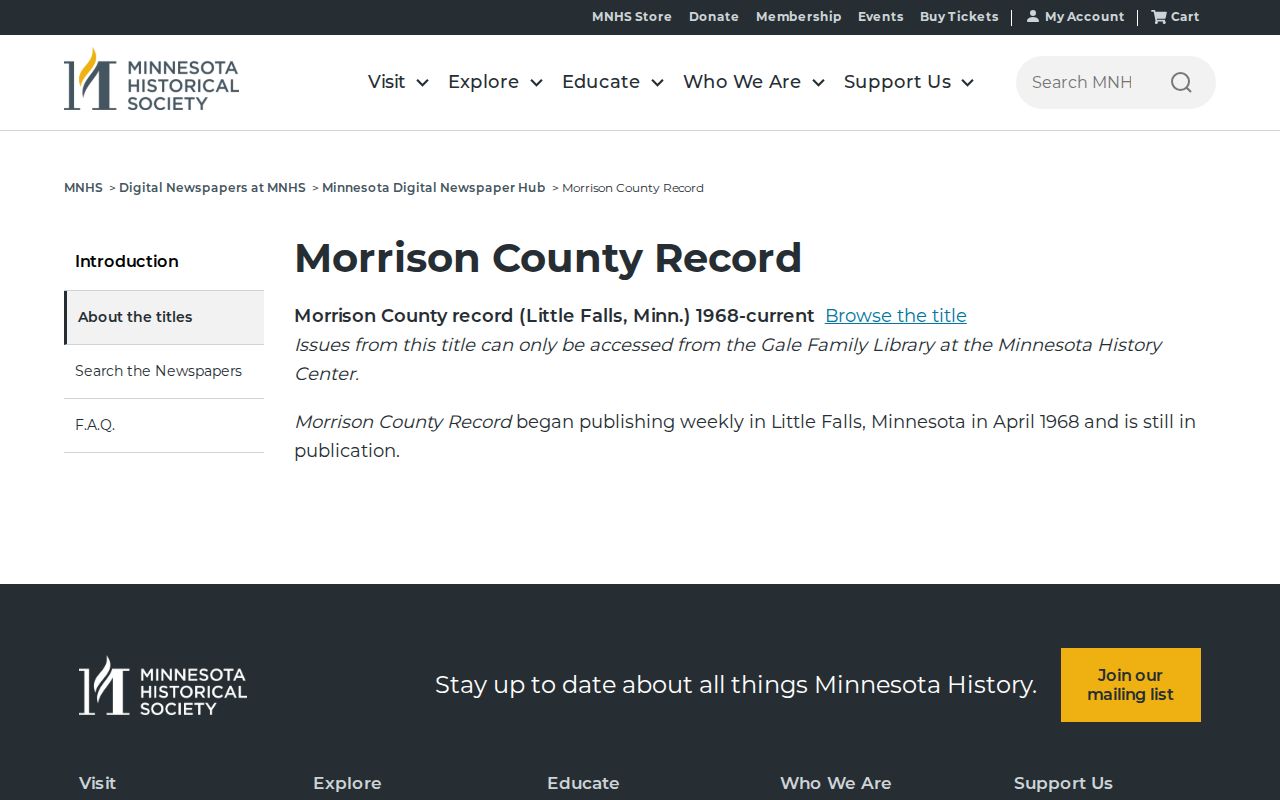
Newspaper archives add helpful historical context. Official records and court files still control the facts of the event and its outcome.
Note: Online roll-off, government retention, news archives, and court disposition are four separate questions that may point to different sources.
Brainerd Blotter Covers Morrison Arrests
The Brainerd Dispatch blotter has a habit of splitting one story into agency sections. Little Falls Police get their own block. So do the Morrison County Sheriff and Motley Police. If a deputy handled the call, an item from Pierz or Royalton may sit under the sheriff heading. It lands there rather than under a city one. Search by agency as well as by town, or you will miss half the arrests.
Treat the blotter as a trailhead, not a destination. A single line can pin down the date, the rough time, and the place. It also gives the stated reason for an arrest. That is enough to make a focused records request without guessing. What the paper cannot do is tell you who is in custody right now. Booking numbers, bond changes, and how a case ended all live in separate systems. The jail, the sheriff's records, and the courts hold those answers.
This agency grouping is also why a place-name search fails so often. Little Falls Police write the city incident report. Morrison County Jail creates the booking record. A sheriff deputy can arrest someone near Pierz. The newspaper then files it under the sheriff instead of the town. Camp Ripley adds one more layer. The Morrison County Sheriff's Office holds criminal investigative authority on the post. So figure out who wrote the report before you request a copy.
Sheriff releases tend toward narrative language, and they often say formal charges are pending. That phrase is a signal the court filing may differ from the offense first suspected. Newspaper shorthand can be even thinner than the release. Read no more into either than the words actually carry. Give each document its own job. Use the original report for incident detail, the jail record for booking facts, and the court file for the disposition.
Morrison Arrest Counts Need Context
Numbers from the county's 2025 annual report give a picture of one year's work. Deputies made 212 arrests, a total that breaks into 192 adults and 20 juveniles. DUI led the listed categories at 70. Liquor-law violations came next at 26, and drug or narcotic violations at 24. These are law-enforcement totals, nothing more. They are not the jail population. They are also not a live trend measure.
Annual figures also cannot plug the holes in a weekly arrest log. They cover a single reporting year and include juveniles. The county jail page, meanwhile, describes adult detention only. Juvenile names and photos have no place in any general public booking treatment anyway. Read the numbers for what they are. They give a sense of the kind of arrest work county reporting reflects.
Older, unofficial material may sit elsewhere. Arrests.org's Morrison section and other commercial archives may carry copied booking records. Those pages can sit stale for years. They can be incomplete, or they can attach the wrong name. None of them is official. None proves current custody. Every entry deserves a check against the sheriff and the courts.
Two more publishers run Morrison County pages of their own. RecentlyBooked describes its section as a 30-day window, and Mugshots.com hosts a county archive. Those windows are set by the sites, not by any county retention schedule. The counts and refresh claims belong to those publishers alone. An entry can linger long after a release or never reflect a correction. Official sources come first. Copied booking photos should never be pulled together into a gallery.
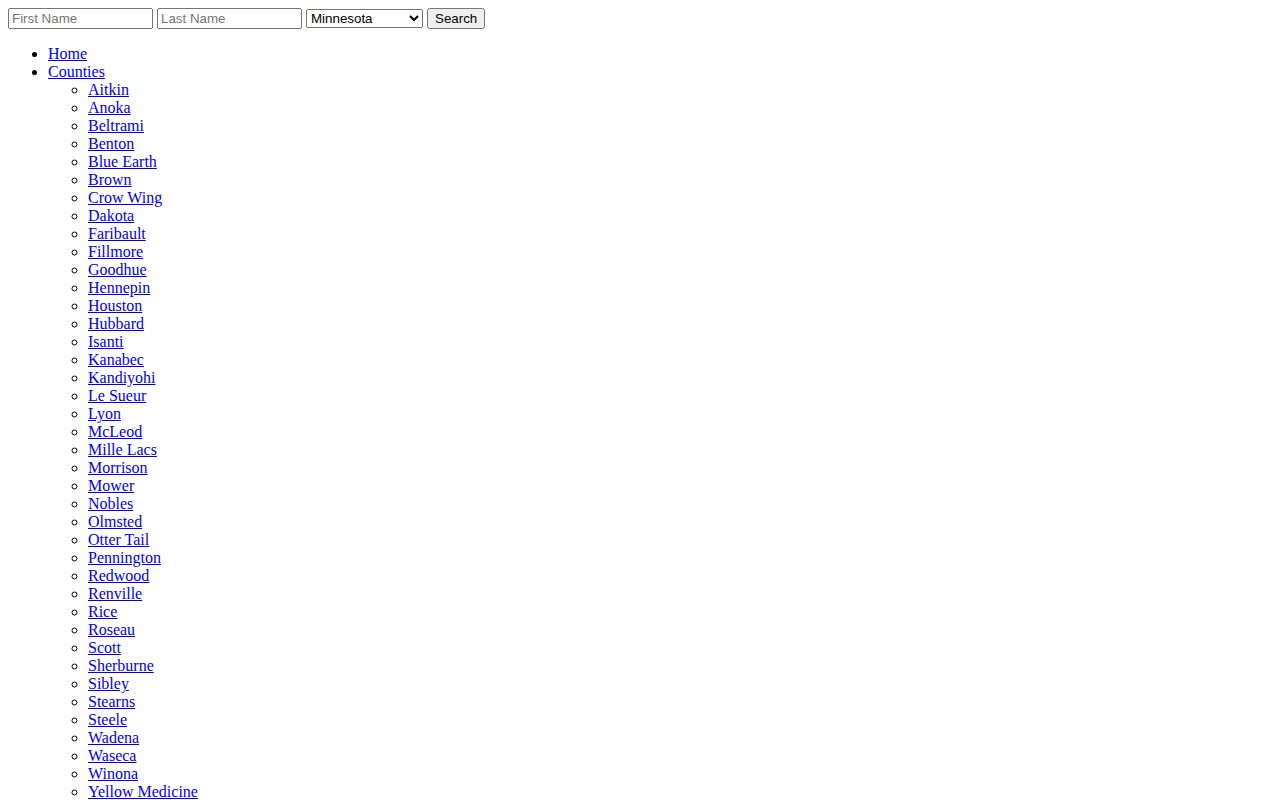
An old web page is not a current arrest record.